
The launch deck is ready. The product team has spent eighteen months building something the founder is sure no one else offers, and the headline on slide one says it plainly: “Malaysia’s first.” Two days after the press release goes out, a reply arrives from a trade contact in Penang. A smaller firm launched something similar three years ago. It never got much attention, but it exists, and the claim is now wrong in public.
This happens more often than most SME owners expect. “First” sounds like one of the safest things a business can say about its innovation. In practice, it is one of the most fragile. This guide explains why, and how to scope, test and document an industry-first achievement before it goes on a brochure, a tender submission or a recognition application.
Why “First” Is a Harder Claim Than It Looks
Most marketing language is loose by design. “Trusted”, “innovative” and “customer-focused” are opinions, and few people treat them as factual statements. “First” is different in three ways.
- It is absolute. A business can be one of several leaders, but it cannot be one of several firsts. A single earlier example anywhere inside the stated scope disproves the claim.
- It requires proving a negative. Being first means showing that nobody else did the same thing earlier. That is far harder than showing what your own business did.
- It is permanent. A sales ranking can change next year. A first claim is about the past, so if it is wrong, it stays wrong in every place it was published.
This is also why a first claim is a different exercise from claiming to be “No. 1” or “the leading” provider. Those are comparative claims about present performance. A first claim is a historical claim about timing, and it needs a different kind of evidence.
First Is Not the Same as Best
Before scoping the claim, be clear about what it can and cannot say. Being first to offer a service, combine certain features or reach a market proves exactly that: timing. It does not prove the product is better than later alternatives, that customers are satisfied, that the offering is profitable or that the business is well run.
Customers understand this instinctively. Many of the best-known products in any category were not the first. If a first claim is used to imply quality, safety or superiority, it starts making promises the evidence does not support. Keep the claim about what actually happened, and let quality be proven separately through customer results, testing and track record.
The Five-Part Scope Statement
Most first claims fail because they are too broad, not because the innovation is fake. “Malaysia’s first smart logistics platform” could be disproved a dozen ways, because nobody agrees what a “smart logistics platform” is. The fix is to write a scope statement before writing any marketing copy. A defensible first claim answers five questions.
- What exactly was done first? Name the specific product, service, combination of features, process or business model. Vague category labels create room for counterexamples.
- Who is the comparison group? All companies? Licensed firms in one sector? Independent retailers? Defining the type of entity makes the claim checkable.
- Where? A city, a state, a country or a region. Each step wider multiplies the number of possible earlier examples.
- When? The date or year the first was achieved, and what event marks it: launch, first paying customer, first delivery or regulatory approval.
- What counts as “done”? Is a pilot enough, or does it need to be commercially available? Announced, or actually delivered? This threshold is where many disputes start.
Here is how the same innovation looks at different levels of scoping:
| Claim version | What is missing | Risk |
|---|---|---|
| “The first smart logistics platform” | Definition, geography, comparison group, date | Very high. Almost certainly disprovable |
| “Malaysia’s first logistics platform with live cold-chain tracking” | Comparison group, threshold, date | High. “Live tracking” means different things to different people |
| “The first Malaysian courier SME to offer customers real-time temperature logs for every chilled parcel, launched commercially in March” | Year, evidence of the launch date | Moderate. Scope is clear, but the timing still needs proof |
| Same claim, with launch year stated and supported by dated customer invoices and a documented market check | Nothing material | Low. Specific, scoped and evidenced |
Notice that the strongest version is narrower, not weaker. A specific first that holds up is worth more to a buyer or a journalist than a sweeping one that falls apart under one email.
The over-qualification trap
There is a limit in the other direction. Add enough qualifiers and any business can be “first” at something: the first bakery on one street to offer a particular flavour on weekdays. A useful test is to ask two questions. Would a customer, investor or industry peer care about this first? And is each qualifier there because it reflects the real achievement, or only because it removes competitors from the comparison? Qualifiers should make the claim accurate, not make it trivial.
Run a Prior-Art Check Before You Publish
Because a first claim depends on what others did, the business has to look outward before it says anything. A practical check for an SME looks like this:
- Search competitors and adjacent players across the full geography in the claim, including smaller firms and businesses that have since closed or rebranded.
- Search trade press, industry association newsletters and past exhibition listings. Many earlier launches were announced once and then forgotten.
- Check archived versions of competitor websites, since old product pages are often removed.
- Search patent and trademark databases where the claim involves a technical invention. MyIPO in Malaysia and IPOS in Singapore are starting points, though patent filings do not show whether something was ever sold.
- Check regulator registers where the claim depends on a licence or approval, such as a “first licensed firm” claim.
- Ask people who know the market: suppliers, distributors, long-standing customers and industry association staff are often the fastest way to discover an earlier example.
Then write down what was searched, where, by whom and on what date. A dated record of a reasonable search will not make an incorrect claim correct. It does show the claim was made in good faith, and it makes the claim far easier to defend or correct later.
Evidence That Actually Proves “First”
The prior-art check deals with everyone else. You also need evidence of your own date. Not all evidence carries equal weight:
| Evidence | What it can prove | What it cannot prove |
|---|---|---|
| Dated invoices or delivery records for the first paying customer | Commercial availability on a specific date | That no one else did it earlier |
| Regulatory approval or licence documents | The date the business was permitted to operate | The date it actually began operating |
| Dated press releases, launch event records and archived web pages | When the business publicly announced it | That the product worked as described at launch |
| Internal development records and contracts | When work started and who was involved | Commercial launch, unless paired with sales evidence |
| Documented prior-art search | That a reasonable effort was made to find earlier examples | An absolute absence of earlier examples |
| Customer testimonials | That customers valued the offering | Timing or novelty |
Strong first claims usually combine at least one item that fixes your own date with a documented search showing no earlier example within the stated scope. If the records are scattered across sales, finance and marketing, it is worth reading our guide on how SMEs can document business achievements before seeking recognition, which covers building an evidence file while the records are still easy to find.
What Consumer Rules Expect
A first claim in advertising is a factual representation, and consumer law treats it that way. In Malaysia, Part II of the Consumer Protection Act 1999 covers misleading and deceptive conduct, false representation and unfair practice, with section 10 dealing specifically with false or misleading representations about goods and services. In Singapore, the competition and consumer regulator published a guide in 2025 on product claims, stressing that claims should be accurate, clear, meaningful and backed by valid, specific and current evidence. The Singapore Code of Advertising Practice also expects advertisers to explain, substantiate and qualify their claims.
The practical message across markets is the same: hold the evidence before the claim is published, not after someone questions it. If a claim touches a regulated area such as health, finance or food, take legal or regulatory advice. This article is general guidance, not legal advice.
Where Independent Recognition Fits
Some firsts are significant enough that a business wants them recognised beyond its own marketing. Independent recognition adds something self-published claims cannot: an outside party has reviewed the definition and the evidence.
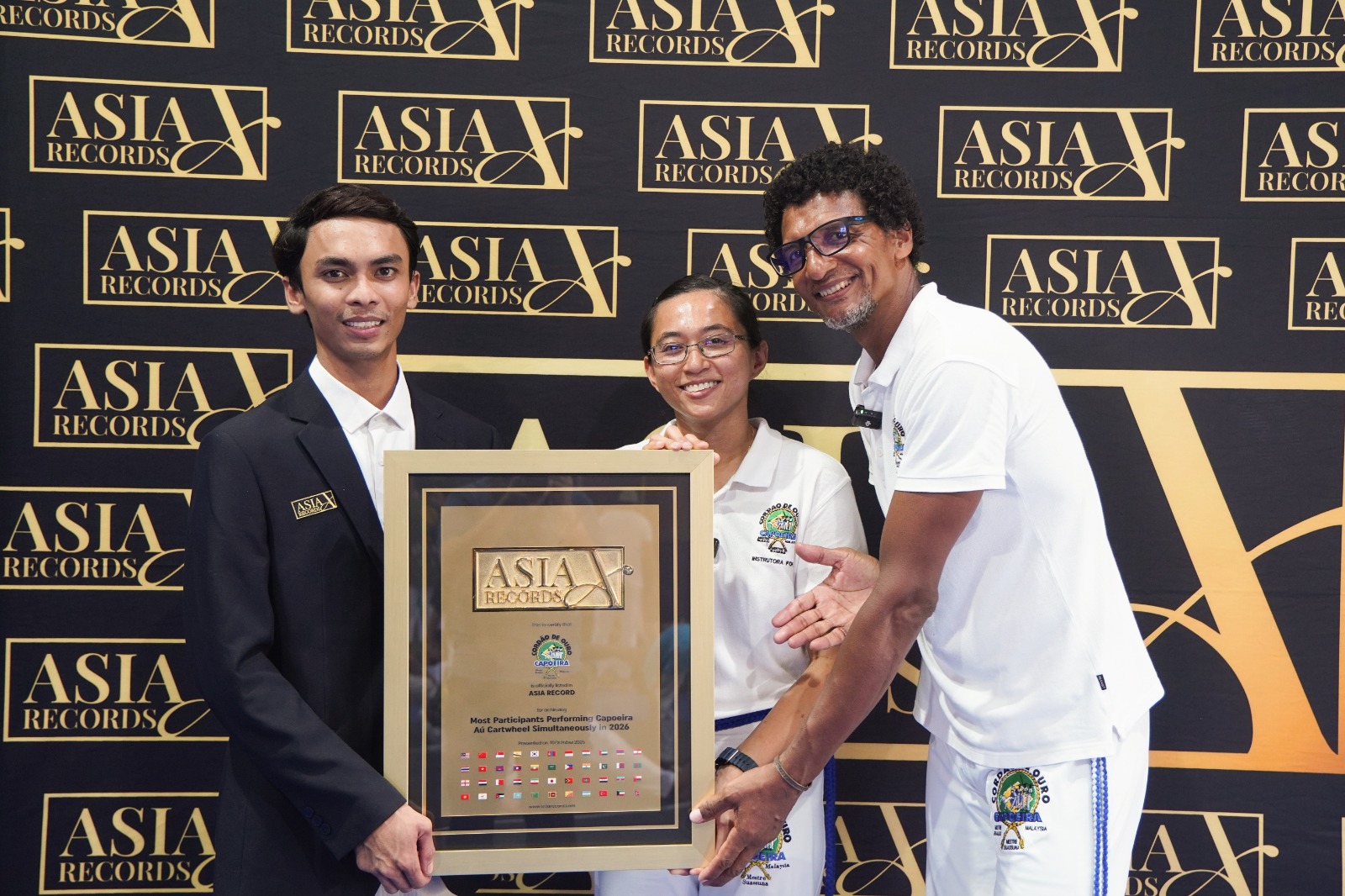
Recent record titles show how carefully scoped a recognised first tends to be. In October 2026, The Image Creator Sdn Bhd was recognised by Asia Record for the title “First Image Consultancy to Develop an Integrated AI-Powered Image, Voice, EQ & Executive Presence Ecosystem in 2026”, as covered in our report on the SHIFT by TIC© platform. MMC Financial Planning holds a first-type title framed around being a Securities Commission-licensed firm integrating strategic budgeting with an organisational performance framework in 2025. Each title names the type of entity, the specific achievement and the year: the same elements as the scope statement above.
For a business considering this route, it helps to understand how Asia Record assesses a proposed record before preparing anything. The process starts by defining exactly what is being recognised, who achieved it and the measure of success, then reviews the supporting evidence for completeness, consistency and verifiability. A business that has already written a tight scope statement and run a prior-art check will find most of that preparation done.
Two cautions apply. First, record recognition documents a specific achievement. It does not replace licences, regulatory approvals, product certifications, halal certification or legal compliance, and a claim that depends on a licence still depends on holding that licence. Second, recognition is one tool among several. Our comparison of awards, certifications and records explains what each form of recognition can and cannot do for an SME, and our guide to telling credible recognition from vanity titles is worth reading before committing to any programme.
A Pre-Publication Checklist for Any First Claim
- Write the five-part scope statement: what, who, where, when and what counts as done.
- Remove any qualifier that exists only to exclude competitors rather than to describe the achievement accurately.
- Run and record a prior-art search across competitors, trade press, archives, patent registers and regulator lists.
- Gather at least one dated document proving your own launch or delivery date.
- Check that the claim says nothing about quality, safety or superiority that the evidence does not support.
- Use the same wording everywhere: website, brochures, tender documents and press materials.
- Keep the evidence file, and set a date to review the claim if your scope is tied to “currently” or “only”.
- Prepare a correction plan in case an earlier example surfaces, including who decides and how quickly the claim comes down.
Common Questions
Can a small business be recognised for being first, or is that only for large companies?
Size is not the deciding factor; scope and evidence are. Many recognised firsts are achieved by SMEs because smaller firms are often the ones introducing a new service model or combination in their market. What matters is whether the first is clearly defined, significant to the industry and supported by verifiable records. That same standard is what separates credible business achievement recognition in Asia from self-declared titles.
How do you get an Asia Record for an industry first?
The starting point is the scope statement and evidence described above. Businesses that want to propose a first for record recognition can review the official Asia Record application steps, which ask applicants to select a category and proposed title and then submit supporting evidence for review. Fees, timelines and evidence requirements vary by proposal and should be confirmed directly with Asia Record.
Is a record the same as a business award?
No. Business awards in Asia typically involve judging, nominations or comparison against other entrants. A record documents a specific, measurable achievement against defined criteria. Both have a place in company recognition, but they answer different questions: an award says a panel rated you highly; a record says a particular achievement was assessed and confirmed.
What if an earlier example turns up after we have published?
Correct it quickly. Narrow the scope if the earlier example falls outside it, or withdraw the claim if it does not. A fast correction costs far less credibility than a defended claim that turns out to be wrong.
Being first can be a genuine point of difference for a growing SME. The businesses that benefit from it are the ones that define the claim precisely, check the market honestly and keep the records that prove it.